← Back/Privacy / New Tab

PrivacyWall Dock

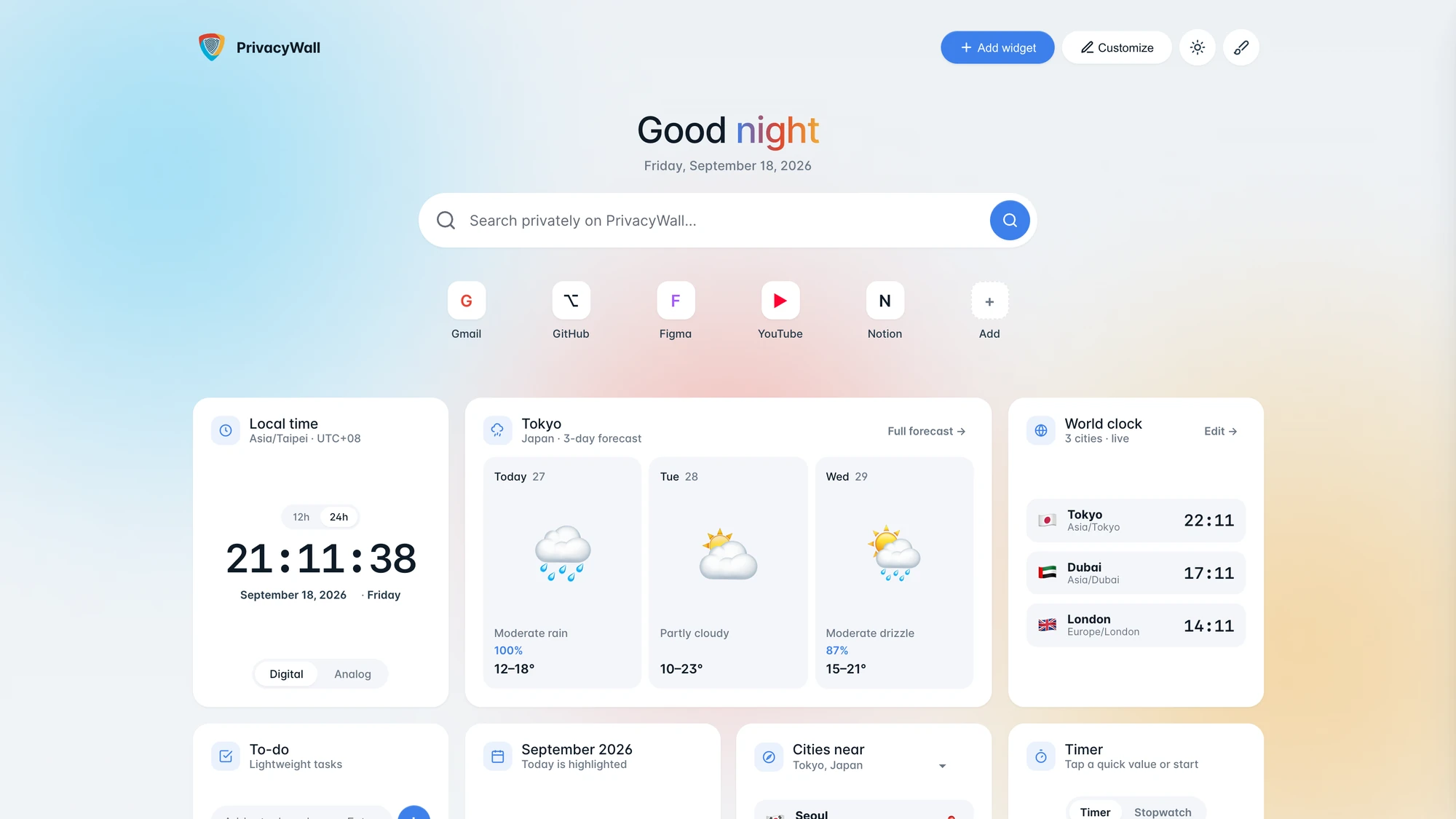
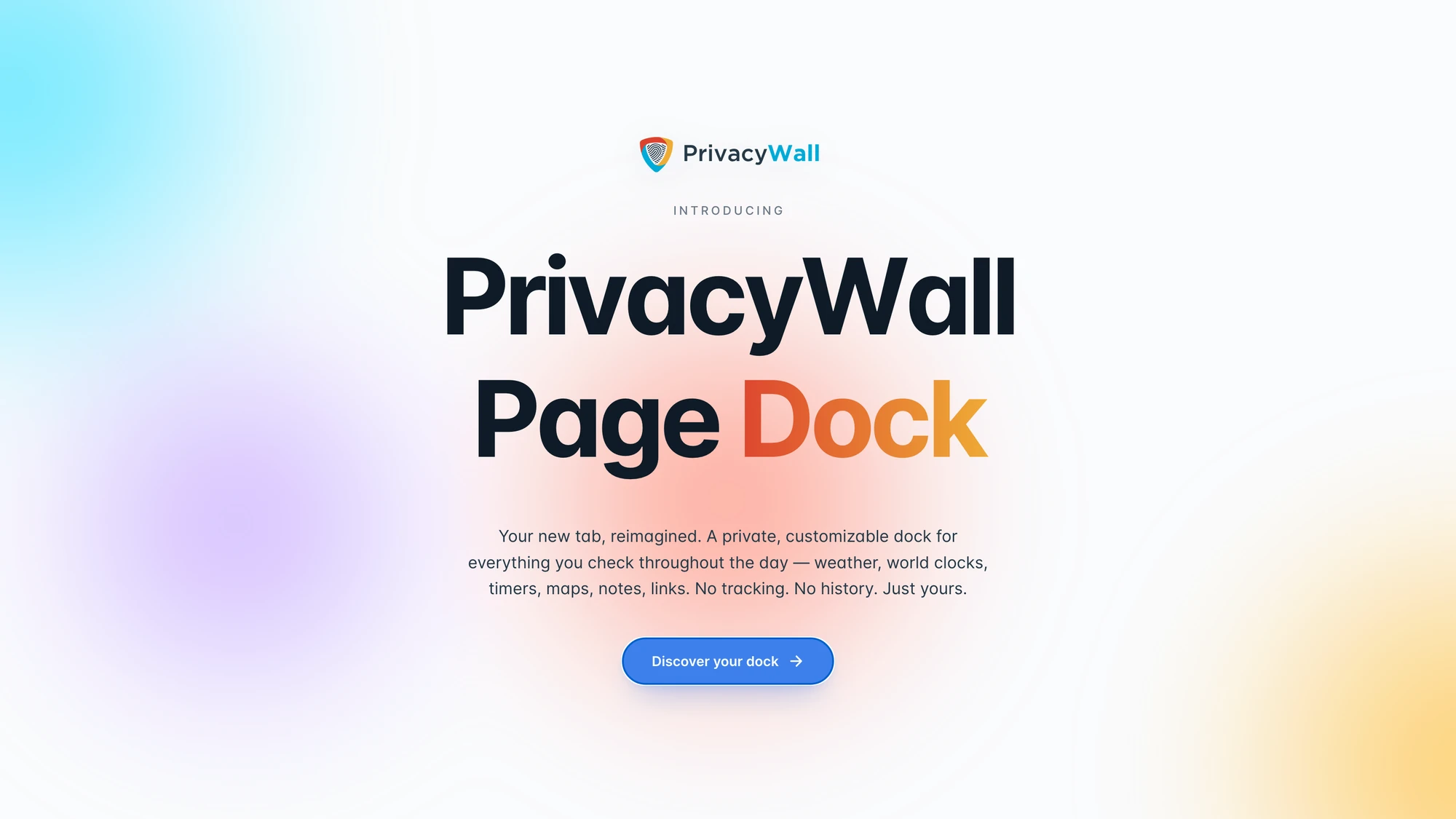
The new tab is the most-visited page a browser has and the least designed, and in mainstream browsers it is monetised with a feed, which means the page you open fifty times a day is the page that watches you most. In 2026 I designed PrivacyWall Page Dock to replace it with a board the user composes from widgets they already check: clocks, weather, timers, notes and links. Every piece of that state lives on the device, which is what makes the privacy claim architectural rather than promotional.

RoleProduct Designer
Year2025-2026
Tags
New TabWidgetsPersonalizationMotion
PrivacyWall Dock
At a glance

10 → 1

Tabs of everyday tools, onto one board

01The problem

The most-visited page in a browser was spent on a feed that watched you.

Mainstream new tabs are monetised with a feed paid for with behavioural data. Meanwhile the small things people check all day were scattered across ten tabs and three apps.

PrivacyWall Dock, the problem

02How we thought about it

Useful here needs no profile, so privacy can be architecture, not a promise.

Everything worth having on a new tab is something the user already checks: the time, the weather, a timer, a list. None of it needs a server or an account. So I treated the page as a board the user composes, with every piece of state kept on the device.

03What we changed

  1. 01

    Kept every piece of state local

    The board, the theme and the widget data never leave the machine. That makes 'no tracking, no history' a structural fact rather than a claim.

  2. 02

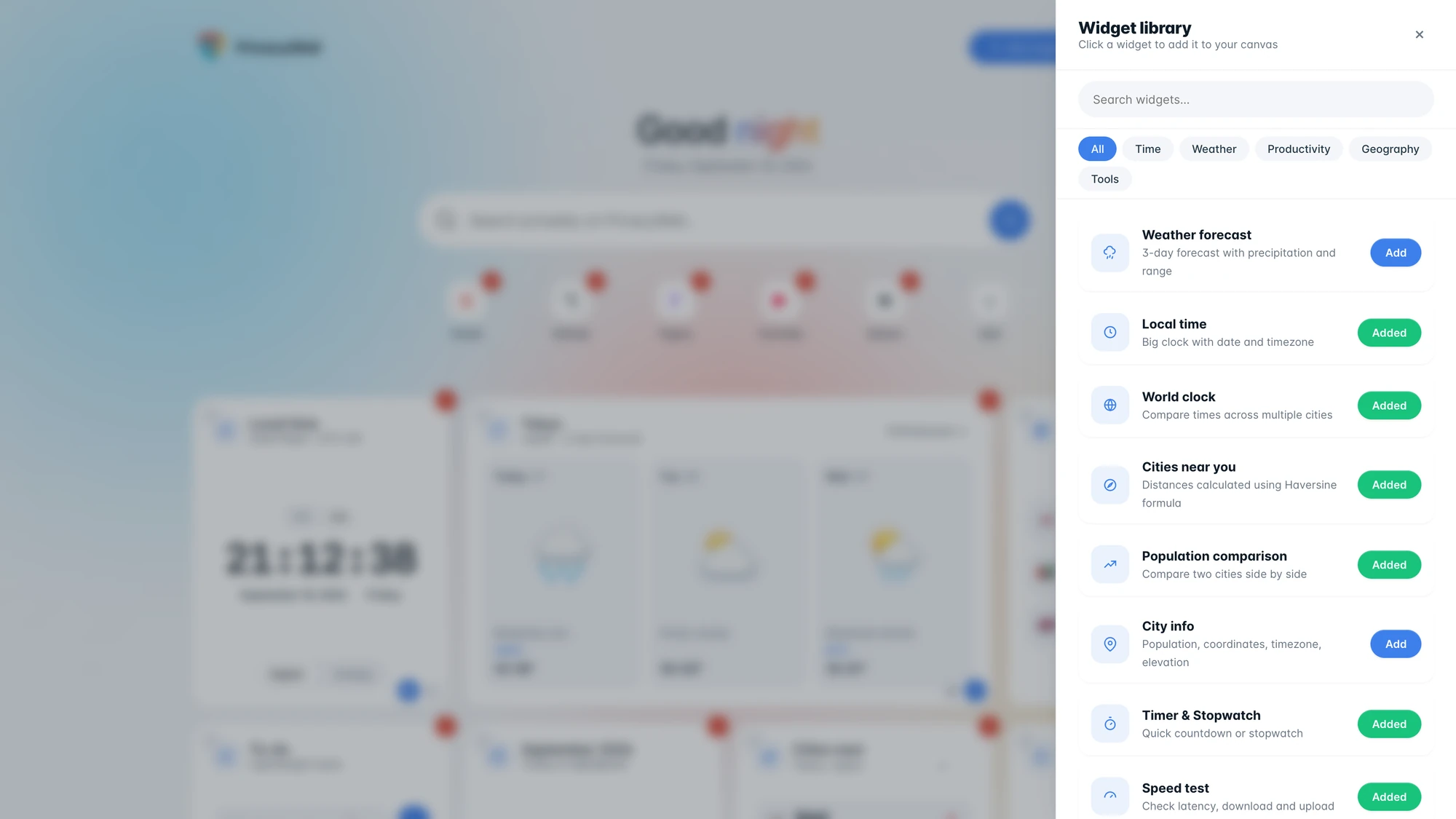
    Grouped widgets into a categorised library

    Time, weather, productivity, geography and tools, each widget described in a line. Adding is one tap and the widget arrives already populated, so the board fills with things people already check.

  3. 03

    Made the board editable in place

    Any configuration that sends you away from the page it configures loses most of the people who wanted it. Customise mode lets people remove, reorder and retheme where the board lives.

Live / PrivacyWall Dock

The dock itself, running here

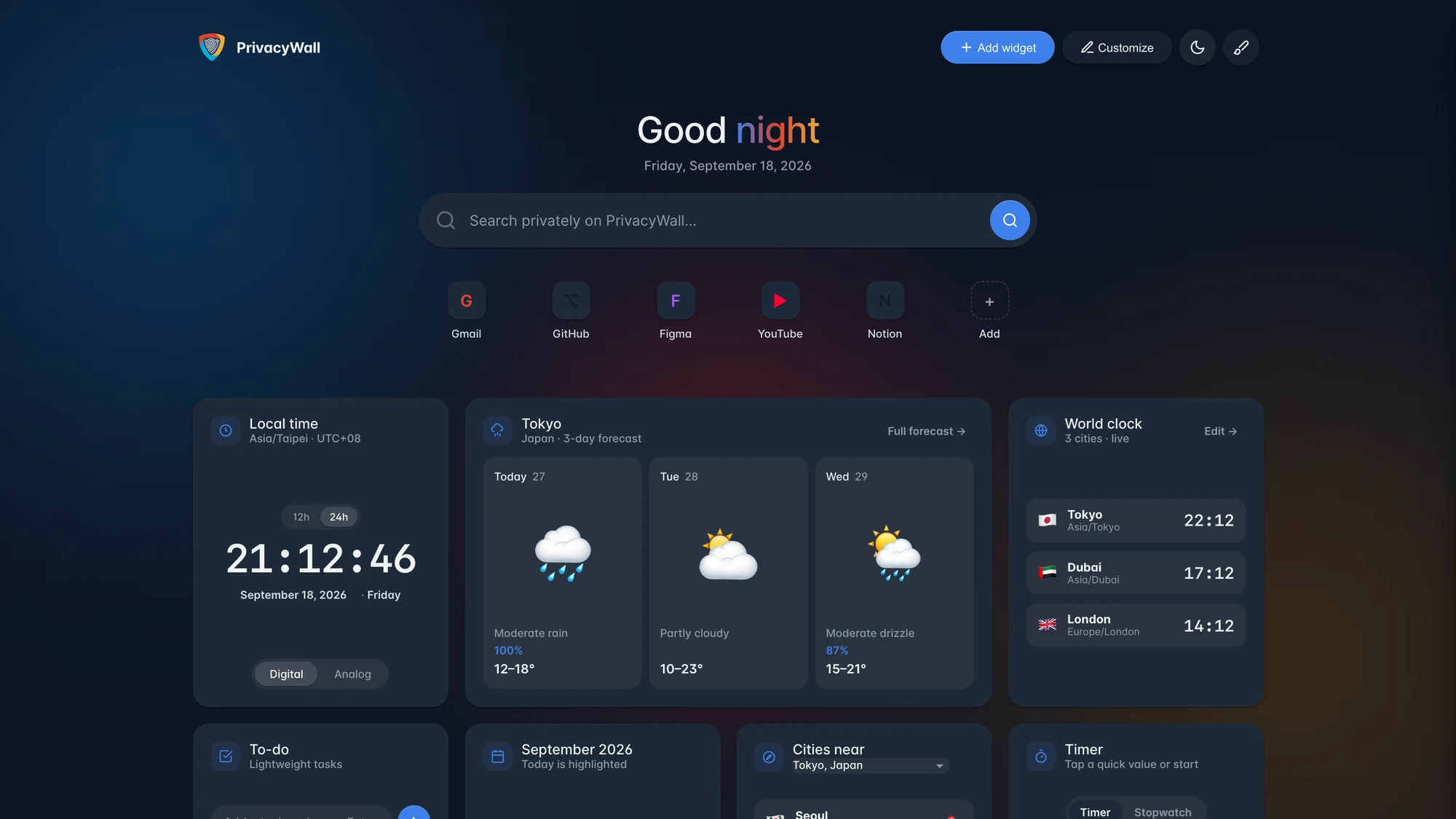
Watch the first run play, then add widgets, edit the board in place, flip it dark and retint it. This is the prototype's own HTML, CSS and JavaScript, not a rebuild of it.

/live/privacywall-dock/index.html· the product's own codeopen full size ↗
loading the real thing…

Everything it stores stays in this frame's own local storage, which is the same mechanism the product uses to keep a board off the network.

The trade-off

I kept AI out of the page entirely, with no server, no account and no model, because a feature that needs a server needs a different design.

PrivacyWall Dock, in use

04What it did

The privacy promise became something a person uses rather than reads, holding tools that had been scattered across ten tabs. It also gave search, maps and the secured-browsing upsell a home surface.

PrivacyWall Dock, detail

How we knewEvidence

An audit of the surface nobody designed, then a prototype composed by hand.

Benchmark

Qualitative

7

Search engines compared across eight dimensions, written as evidence, interpretation and recommendation with a confidence level.

Confidence: Medium

Benchmark

Qualitative

Mobbin grounding on shipped products, so each recommendation arrives with precedent attached.

Code review

Quantitative

The working prototype inspected line by line.

Confidence: High

Prototype

Qualitative

Built as a working prototype so hierarchy and transitions are judged by using them.

Usability test

Mixed

The PrivacyWall work was tested with users and its tasks passed. Participant details are not published on this page. The benchmark above is desk research.

DecisionsAnd why

What we saw, what we knew, what we chose, and what we gave up.

01

Every piece of state stays on the device

What we saw
The most-visited page in a browser is the least designed, and mainstream versions pay for it with a feed.
Evidence
Audit· QuantitativeWhat a privacy browser already owns, and which surfaces the category treats as inventory.
Prototype· QualitativeA working board with live widgets, a library and customise mode.
So we
No server, no account and no model; board, theme and widget data are local.
Not
Syncing boards through an account.
What happened
No tracking and no history is a fact of the architecture, not a promise.

02

Edit where it lives

What we saw
Configuration that sends you away from the page it configures loses most of the people who wanted it.
Evidence
Design judgement· QualitativeAny setting that leaves the page is a setting few will use.
So we
Customise mode removes, reorders and rethemes the board in place.
Not
A settings screen.
What happened
Checked: Whether a new user adds and removes a widget without help. Result: it passed.

User testingWhat was and was not tested

Benchmarked, prototyped and tested with users. The tasks below were run against pass bars written first, and every task passed. Participant details are not published on this page.

“Make this new tab yours: add a clock and a to-do, and change the theme.”

Completion, whether customise mode is found without help

5 of 5 within 2 minutes

Passed

“Where is your data kept?”

Can say it stays on the device

4 of 5 correct

Passed

Every task met its pass bar. Participant details and timings are not published on this page.

My role

Product Designer

What I personally owned on this project.

  • 01Designed the board model and the widget system, including every widget's content and states
  • 02Designed the categorised widget library and the in-place customise mode
  • 03Designed the cinematic first-run sequence and the orchestrated page reveal that follows it
  • 04Specified local-only persistence as the mechanism behind the privacy promise
  • 05Designed the theming layer, light, dark and palette retinting across the whole board
Made with
Prototype in HTML/CSS/JSLocal-first stateDesign tokensChoreographed motionLight + dark theming
Next Project

PrivacyWall Travel

© 2026 Alhasan HosniDesigned & Built with precision