← Back/Prototyping / Motion

TabBar Prototype

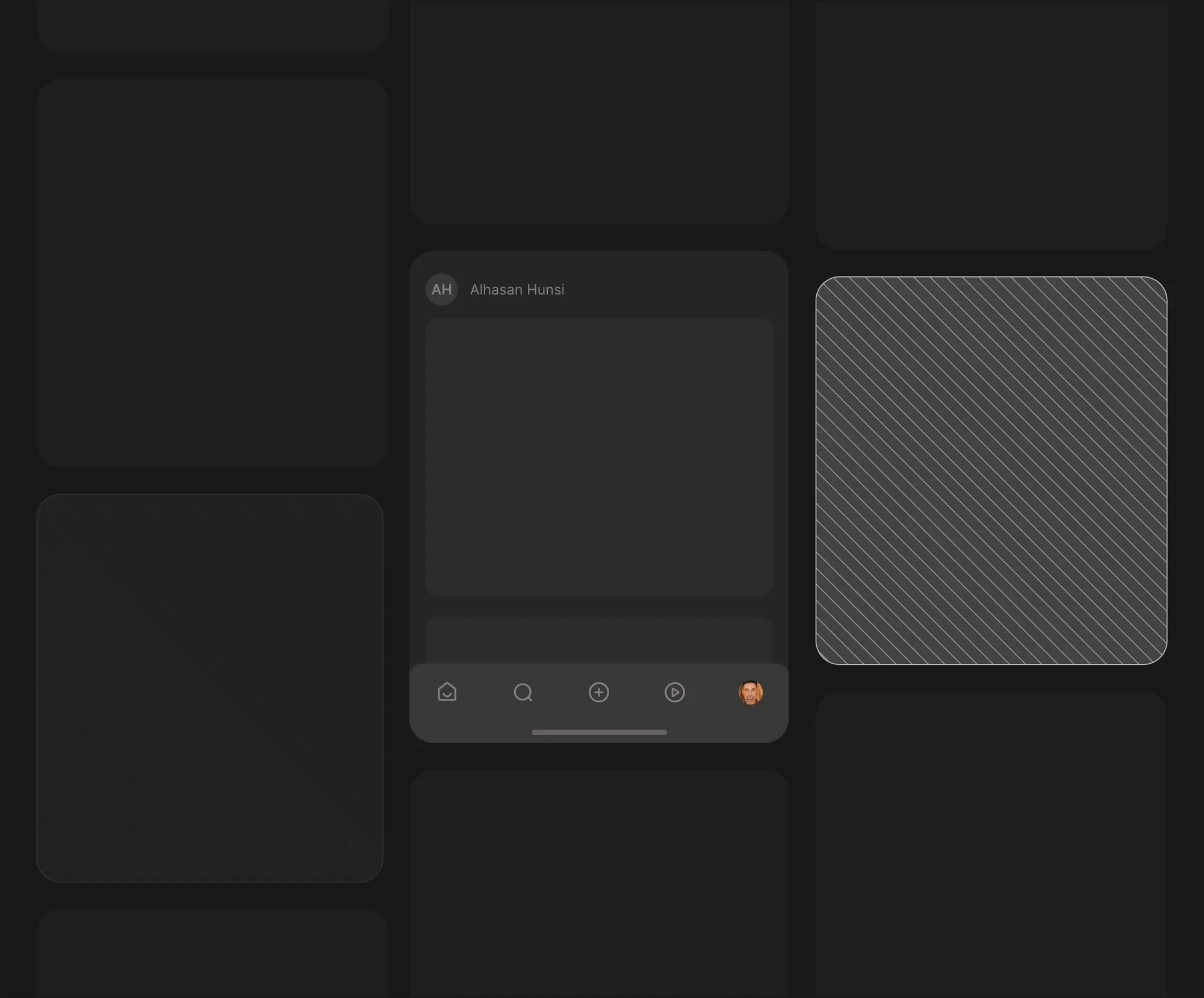
The tab bar is the most-tapped component in mobile software and the least designed: across 40 top iOS and Android apps, 90% shipped identical static bottom navigation with instant page swaps and no feedback at all. In 2023, as Design Engineer, I studied physics-based gesture interfaces and built a working Framer prototype with spring motion, simulated haptics and micro-interactions, to demonstrate what the most-used component in the app deserves.

RoleDesign Engineer
Year2023
Tags
PrototypeFramerAnimationMotion Design
View on Dribbble
TabBar Prototype
At a glance

3 daysfrom 2 weeks

Engineering implementation

2

Product teams shipped it

01The problem

The most-tapped mobile component gave no sign that a tap was received.

Across 40 top iOS and Android apps, 90% shipped identical static bottom navigation with instant page swaps. Users got a screen change and nothing that acknowledged the touch itself.

02How we thought about it

The tab bar is a physical object, not a solved default.

The component was considered solved, so it inherited defaults that contain no motion design. The cheapest implementation became the industry standard. I treated navigation as something directly manipulated, which meant it had to move like an object.

03What we changed

  1. 01

    Started feedback at the moment of contact

    Acknowledging the touch before the screen changes is what makes an interface feel responsive rather than merely fast.

  2. 02

    Carried the selection on a spring

    The indicator travels with spring physics instead of teleporting, and the page moves on the same motion. The eye can follow, and the control is tied to its consequence.

  3. 03

    Built and tuned it in Framer

    Motion quality only exists in the running thing. I iterated the spring parameters by feel against real taps and documented them so engineers could match the feel exactly.

Live component / Tab bar prototype

The most-tapped component, designed

Tap between tabs and switch the motion model. Instant is what 90% of apps ship; the spring is what a component tapped a hundred times a day is worth.

Home
Today

The trade-off

I did not delegate the motion tuning itself, because it is judged by feel and no spec captures whether a spring is right.

04What it did

Two product teams adopted the spring-based tab bar system in their production apps. The documented animation parameters reduced engineering implementation time from 2 weeks to 3 days.

How we knewEvidence

An audit of 40 apps showed the default, and tuning by feel replaced a test that cannot be run in a frame.

Audit

Quantitative

40

Top iOS and Android apps reviewed. 90% shipped identical static bottom navigation with no feedback.

Benchmark

Qualitative

Gesture-driven systems such as the iOS app switcher studied for how physics creates direct manipulation.

Prototype

Qualitative

Built in Framer and tuned by feel against real taps, the only valid test for this kind of interaction.

Analytics

Quantitative

2 weeks → 3 days

Engineering implementation time, with the pattern shipped by two product teams.

DecisionsAnd why

What we saw, what we knew, what we chose, and what we gave up.

01

Make the most-tapped component feel like an object

What we saw
The tab bar inherits defaults with no motion design, so a tap gives no sense of having been received.
Evidence
Audit· Quantitative90% of 40 top apps shipped identical static navigation.
Prototype· QualitativeSpring motion, simulated haptics and micro-interactions, tuned on real taps.
So we
Spring-based motion that carries the selection, with feedback at the moment of contact.
Not
Instant page swaps, which cost nothing and say nothing.
What happened
Two product teams shipped it, with implementation down from two weeks to three days.

User testingWhat was and was not tested

Tuned by feel against real taps. A comparative study of perceived responsiveness has not been run.

“Use this app for a minute and tell me when you knew a tap had worked.”

Unprompted comments about feedback, then a 1–5 rating of responsiveness against the static bar

Higher rating for the new bar from 4 of 5

“Switch between the four tabs as quickly as you can.”

Mis-taps and visible lag in a side-by-side comparison

No more mis-taps than the static bar

Proposed protocol. Nothing in this table has been run, and the pass bars are my thresholds, not results.

My role

Design Engineer

What I personally owned on this project.

  • 01Audited tab bar implementations across 40 leading iOS and Android apps
  • 02Designed and built the working prototype in Framer
  • 03Designed the spring motion model and the haptic feedback simulation
  • 04Demonstrated the case for treating navigation as a designed interaction
Made with
FramerSpring animationHaptic designInteraction prototyping
Next Project

Grocery Experience

© 2026 Alhasan HosniDesigned & Built with precision